Gaming Accessories & Interactive Hardware
Product Development Across Console Ecosystems
Featured Gaming Case Studies
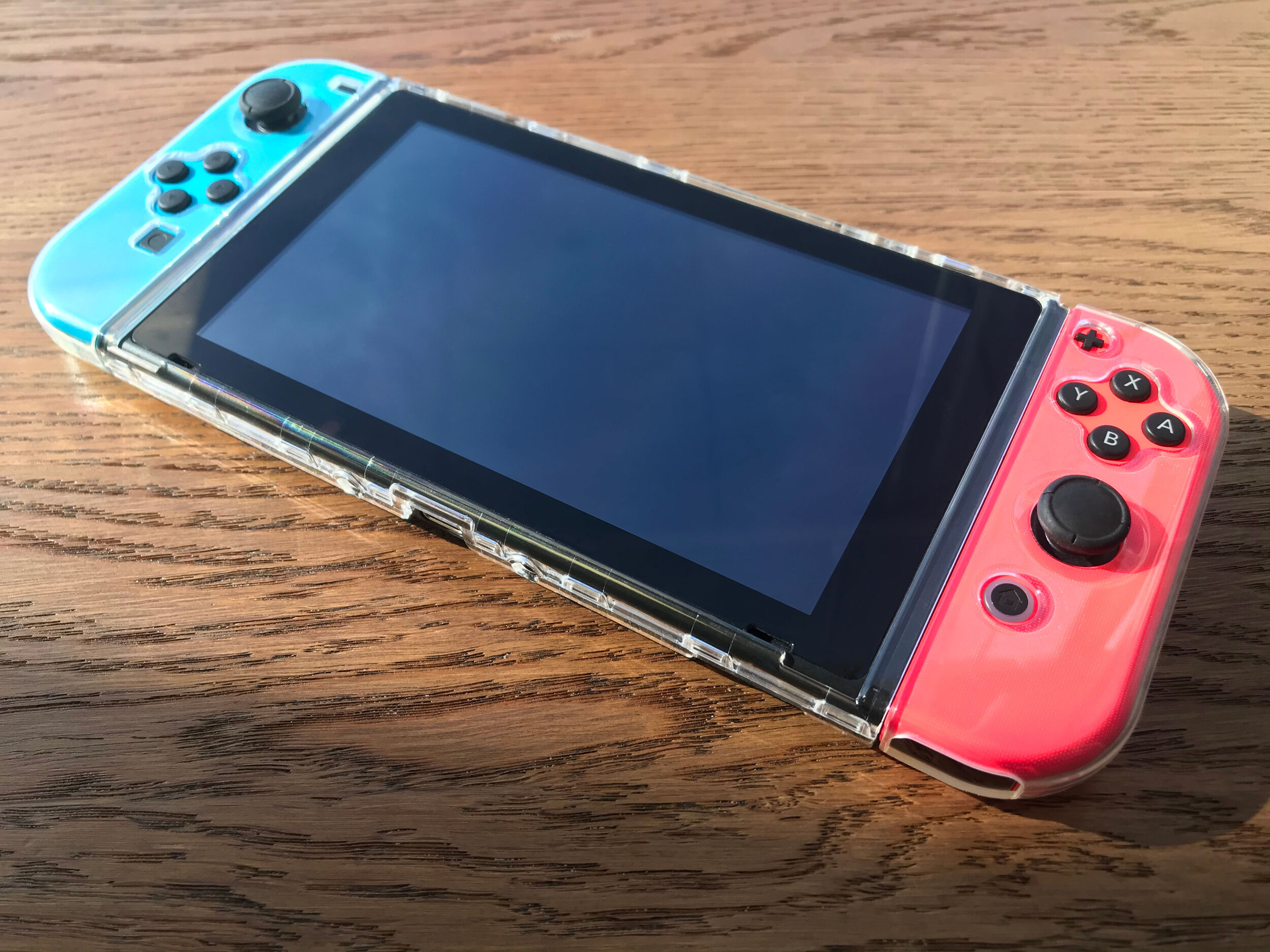
Protection Without the Bulk
A low-profile protective accessory for Nintendo Switch designed to add everyday protection without compromising portability, control access, or handheld play.
Thin Case balanced close platform fit, molded-plastic execution, user installation, durability, packaging clarity, and retail pricing. It became one of Nyko’s most successful accessories.
Focus: Platform Fit, Protective Hardware, Injection Molding, Supplier Development, Retail Launch

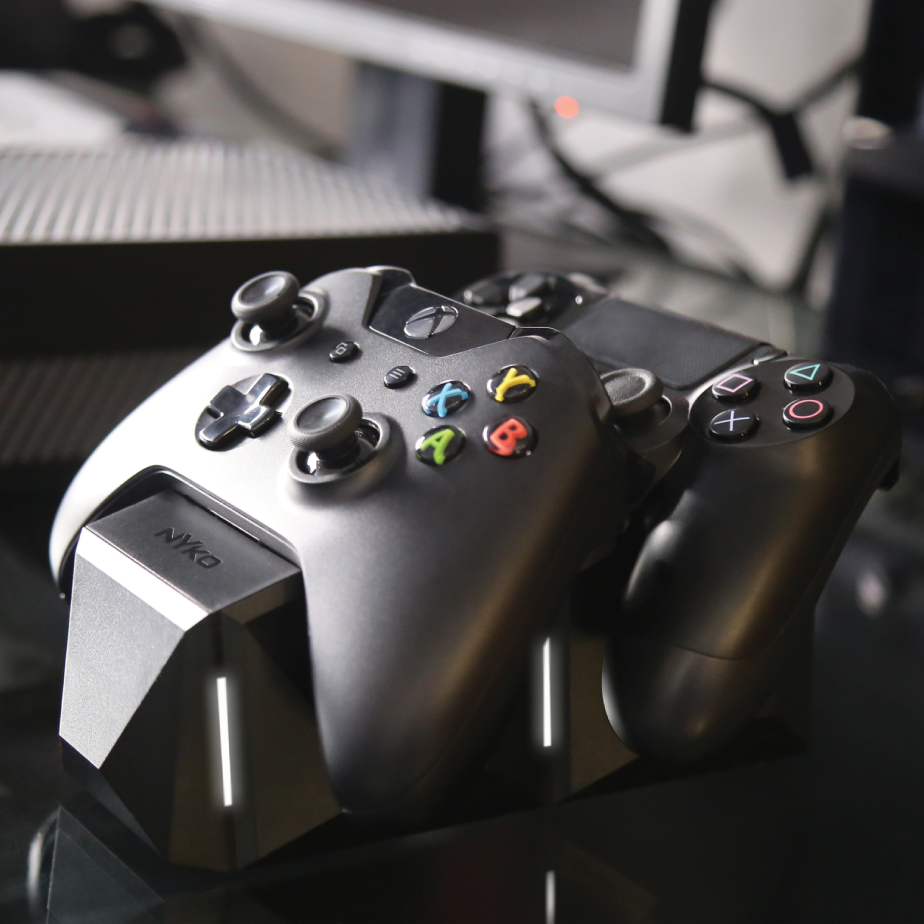
A Modular Charging System Built to Scale
A connected controller-charging ecosystem developed across Xbox, PlayStation, and Nintendo platforms.
Charge Block allowed users to begin with one charging base and expand the system around the controllers and consoles they owned. The architecture connected platform-specific products through a consistent modular interface and visual language.
Focus: Modular Architecture, Controller Charging, Electronics Integration, Multi-SKU Development, OEM Execution

Transforming the Switch Into a Tabletop Arcade
A buildable and customizable arcade cabinet that transformed Nintendo Switch gameplay into a tactile physical experience.
PixelQuest combined constructible architecture, mechanical button remapping, Joy-Con integration, joystick extensions, user customization, assembly instructions, packaging, and Amazon launch content.
Focus: Interactive Hardware, Mechanical Mechanisms, Constructible Products, Instruction Design, E-Commerce
I develop gaming accessories that enhance how players protect, charge, organize, and interact with their hardware.
My work spans Nintendo, Xbox, and PlayStation ecosystems, including protective cases, modular charging platforms, controller accessories, interactive tabletop products, and retail-ready hardware. Each project required balancing platform compatibility, user experience, product architecture, manufacturing, packaging, pricing, and launch timing.
15+ Years in Consumer Product Development
Major Console Ecosystems
National Retail Distribution
Concept Through Commercialization
Gaming Products Built for Real Use
Gaming accessories operate within tightly defined hardware ecosystems. Products must work around existing console geometry, controls, electronics, charging requirements, software behavior, and platform expectations.
At the same time, they must deliver an immediate consumer benefit and remain understandable in a crowded retail category.
My gaming product work has addressed challenges including:
Platform-specific fit and compatibility
Controller charging and battery integration
Modular product architecture
Physical control remapping
Protective coverage without excessive bulk
Injection-molded plastic development
Constructible and flat-pack products
Access to ports, buttons, vents, and speakers
Packaging and compatibility communication
Retail price and margin requirements
Multi-SKU product family development
Seasonal retail launch schedules
The result is hardware that fits the platform, solves a clear user need, and can move through manufacturing and commercial launch.
Gaming Product Development Capabilities
-
I develop accessories around existing gaming hardware, accounting for device geometry, control access, charging interfaces, ventilation, speakers, user handling, and normal production tolerances.
Relevant experience includes:
Nintendo Switch and Joy-Con integration
Xbox controller charging systems
PlayStation controller charging systems
Controller fit and docking
Battery and charging-adapter integration
Console and accessory compatibility
Multi-platform product families
-
Gaming products often need to extend beyond a single SKU.
I define physical product systems that can support platform variants, configurations, accessories, and future line extensions while maintaining a consistent product language.
Relevant experience includes:
Modular charging systems
Shared platform architecture
Platform-specific component adaptation
Constructible product systems
Multi-SKU family development
Product-line consistency
SKU and configuration planning
-
Gaming accessories succeed when the benefit is immediate, and the interaction feels natural.
I evaluate how users install, hold, dock, charge, assemble, customize, and play with the product.
Relevant experience includes:
One-handed controller docking
Case installation and removal
Mechanical button remapping
Arcade-style joystick extensions
Tabletop viewing and gameplay
Product assembly
Physical customization
Charging-status communication
-
Physical prototypes reveal issues that cannot be resolved through renderings alone.
I use prototypes and supplier samples to evaluate fit, interaction, stability, proportions, assembly, surface quality, and production readiness.
Relevant experience includes:
SLA and 3D-printed prototypes
Device and controller fit checks
Docking-angle evaluation
Modular connection testing
Mechanism testing
Sample review and refinement
Packaging-fit validation
Production-tolerance review
-
Gaming accessories must meet cost expectations while delivering repeatable fit, durability, and finish.
I work through product details with suppliers and cross-functional teams to move concepts toward scalable production.
Relevant experience includes:
Injection-molded plastics
Wall thickness and draft considerations
Parting and assembly logic
Internal electronics packaging
Charging components
Mechanical linkages
Material and finish review
OEM/ODM supplier coordination
Design for manufacturing
Production sample refinement
-
The product benefit and compatibility must be understood within seconds.
I support packaging and product content that explains platform fit, including components, installation, features, and product value.
Relevant experience includes:
Walmart, Target, and GameStop launch
Amazon product pages and enhanced content
Packaging structure and graphics coordination
Compatibility messaging
Feature callouts
Assembly instructions
Retail-ready imagery
Product-family communication
How I Approach Gaming Product Development
-
Identify the use case, pain point, platform constraint, channel opportunity, and commercial goal.
-
Define product structure, interaction, mechanisms, component layout, assembly, platform variants, and future extensions.
-
Define product structure, interaction, mechanisms, component layout, assembly, platform variants, and future extensions.
-
Test fit, usability, stability, controls, installation, mechanisms, product proportions, and packaging assumptions.
-
Resolve materials, part geometry, tolerances, assembly, electronics integration, cost, and supplier execution.
-
Develop packaging, instructions, product imagery, compatibility messaging, retailer content, and launch-readiness documentation.
Commercial Success
Thin Case became one of Nyko’s most successful accessories by solving a clear need with disciplined product execution.
Scalable Product Architecture
Charge Block expanded one charging concept into a coordinated multi-platform product family.
Interactive Product Innovation
PixelQuest created a new physical gaming experience through construction, customization, and mechanical control remapping.
Major Retail Channels
Gaming products were commercialized through Walmart, Target, GameStop, Amazon, and other retail and e-commerce channels.
Market Recognition
Gaming work received editorial coverage from Polygon, Windows Central, Hardcore Gamer, Variety, and Engadget.
Developing a Gaming Accessory?
I help founders, startups, gaming brands, and product teams develop platform-compatible accessories from early concept through product architecture, CAD refinement, prototyping, supplier development, DFM preparation, packaging, and commercial launch.