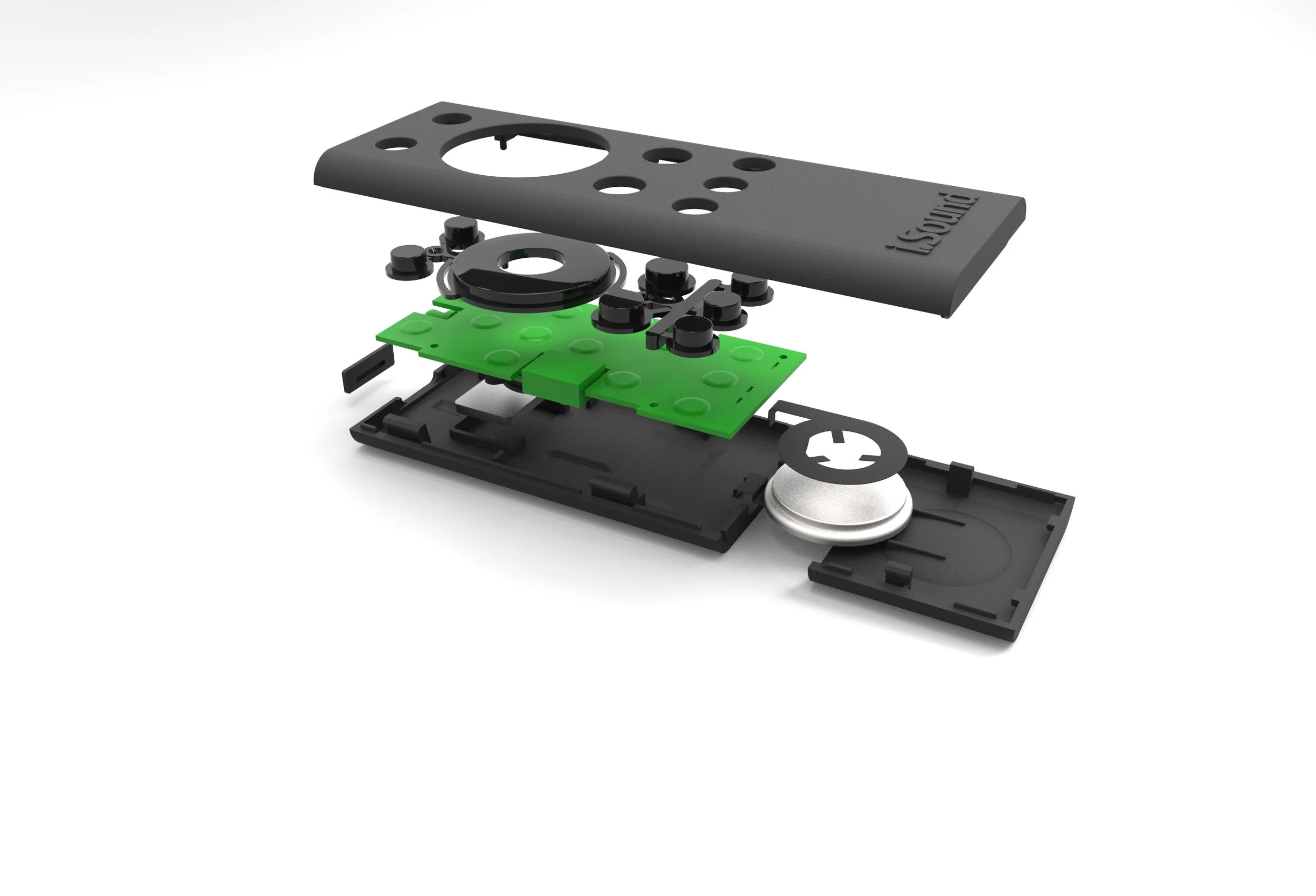
iPad Audio Accessory Redesign Case Study
A redesigned iPad audio accessory developed for i.Sound was created to improve tablet compatibility, device retention, and entertainment use as early as iPad generations evolved in size and form factor.
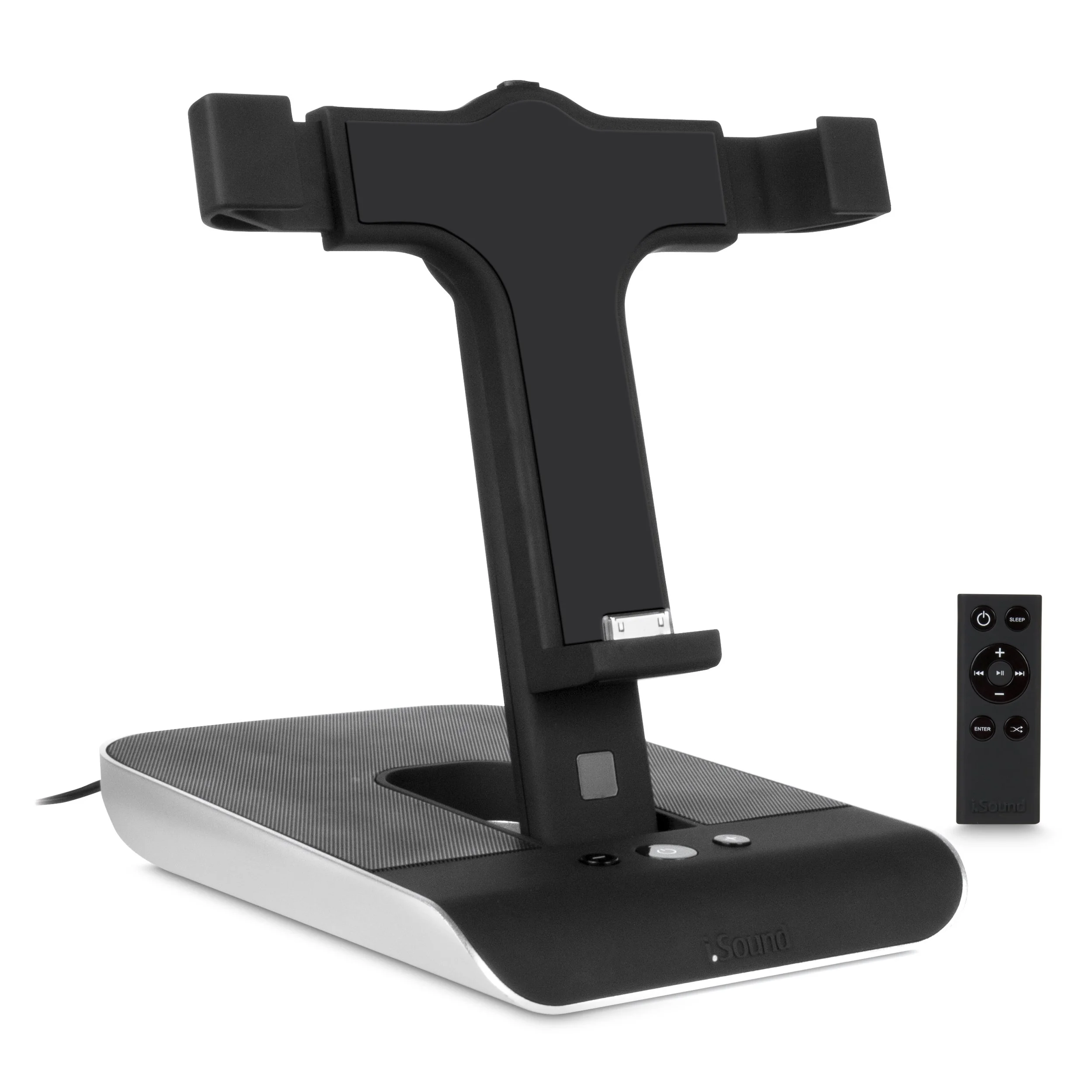
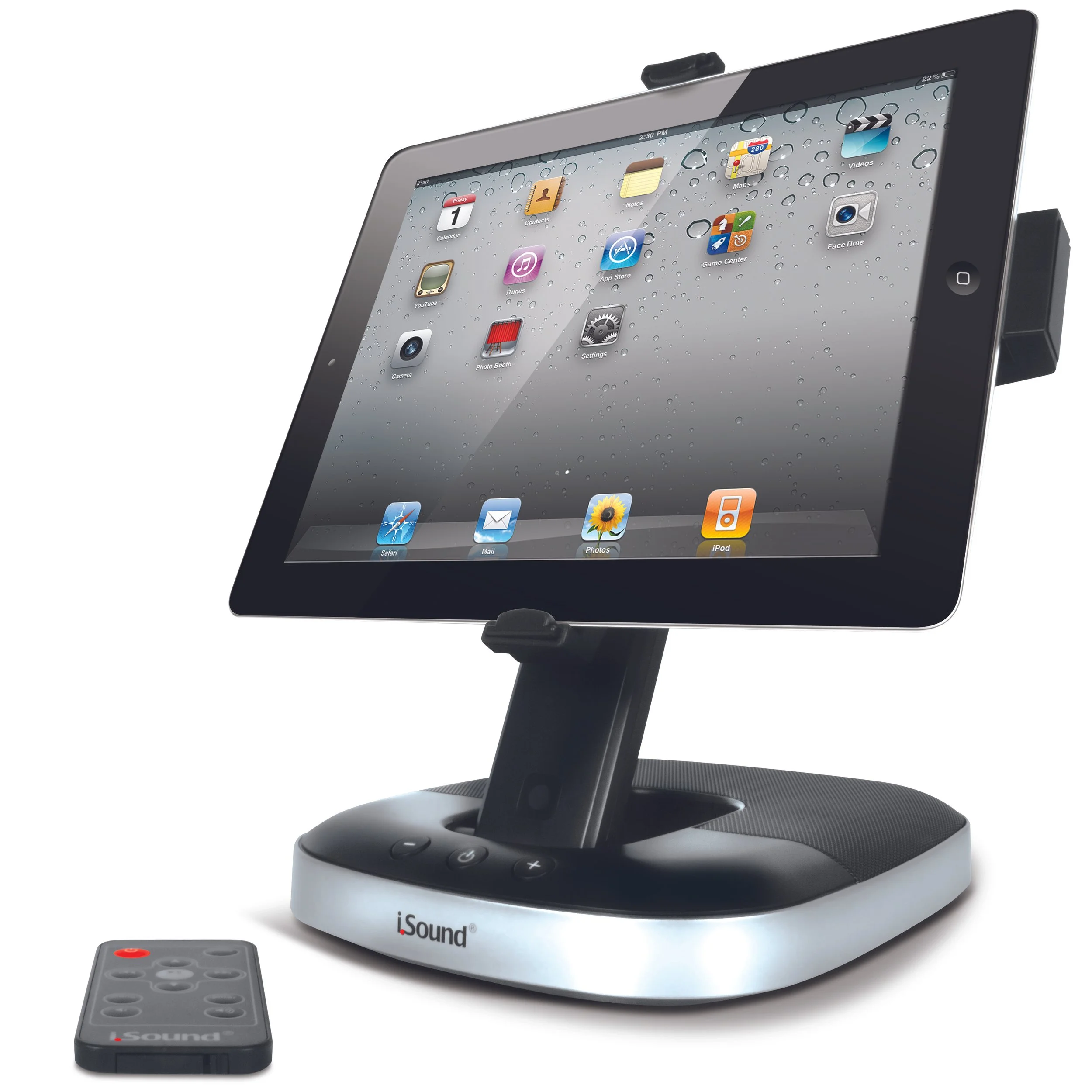
Cinema Sound Pro was built on the original Cinema Sound concept by refining the clamping system, tablet support, audio experience, viewing angle, usability, packaging, and retail-ready product communication.
isound cinema sound pro
for ipad
Role: Product Development and Industrial Design
Brand: i.Sound
Category: Consumer Electronics Accessories
Product Type: iPad / Tablet Audio Accessory
Focus: Product Redesign, Tablet Compatibility, Clamping Mechanism, Audio Hardware, Product Architecture, OEM Development, Packaging
Project Overview
Cinema Sound Pro was developed as a redesign of the original i.Sound Cinema Sound was created during a period when the iPad category was evolving rapidly.
The original product established the core idea: combine tablet audio, stable viewing, and an entertainment-focused accessory format. As new iPad generations introduced changes in size, thickness, edge profile, and user expectations, the product needed to evolve.
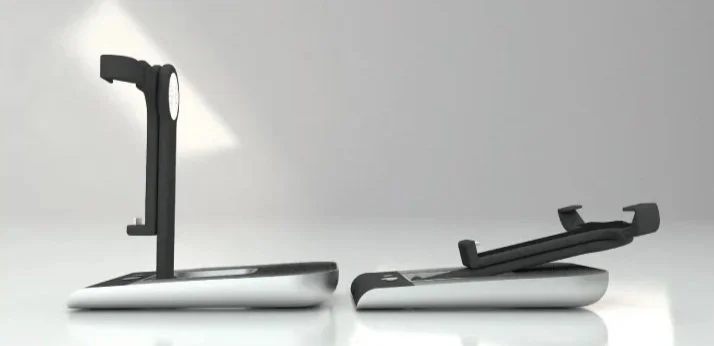
The key development challenge became the redesign of the clamping system. Cinema Sound Pro needed to support evolving iPad form factors while maintaining secure device retention, easy insertion and removal, stable viewing, audio functionality, and retail-ready usability.
The project demonstrates how consumer electronics accessories must adapt as the platforms they support continue to change.
The Opportunity
As tablets became central to video watching, gaming, music, and casual media use, consumers needed accessories that improved the entertainment experience without making the device difficult to insert, remove, or use.
The opportunity was to take the original Cinema Sound concept and redesign it around a more flexible, future-aware tablet support system.
Rather than treating the iPad as a fixed-size device, the redesign needed to account for platform changes. Early iPad generations were evolving quickly, so the product architecture had to support compatibility, retention, and everyday usability without becoming overly bulky or complicated.
Cinema Sound Pro created an opportunity to deliver:
Improved audio for iPad media use
Stable tabletop viewing
Secure tablet retention
Compatibility across evolving iPad form factors
Easy device insertion and removal
Access to key buttons, ports, and controls
A product format suitable for home, desk, and travel-adjacent use
Clear retail and e-commerce communication
The challenge was to build a product around a moving hardware target. Apple’s iPad dimensions and industrial design were changing across early generations, so the product needed enough mechanical flexibility to remain useful without becoming loose, oversized, or overly complicated.
My Role
I contributed to the product development and industrial design process, with a focus on product architecture, tablet fit, clamping interaction, usability, sample review, and commercialization support.
My responsibilities included:
Supporting the redesign direction from the original Cinema Sound to Cinema Sound Pro
Reviewing product architecture for an iPad-compatible audio accessory
Developing and evaluating clamping-system concepts
Assessing compatibility across evolving iPad sizes and form factors
Reviewing device insertion, removal, retention, and stability
Considering access to buttons, ports, speakers, and controls
Reviewing product proportions, viewing angle, and tabletop use
Coordinating feedback with suppliers and cross-functional teams
Evaluating samples for fit, finish, usability, and production readiness
Supporting packaging and consumer-facing feature communication
The Original Cinema Sound
Product Development Approach
-
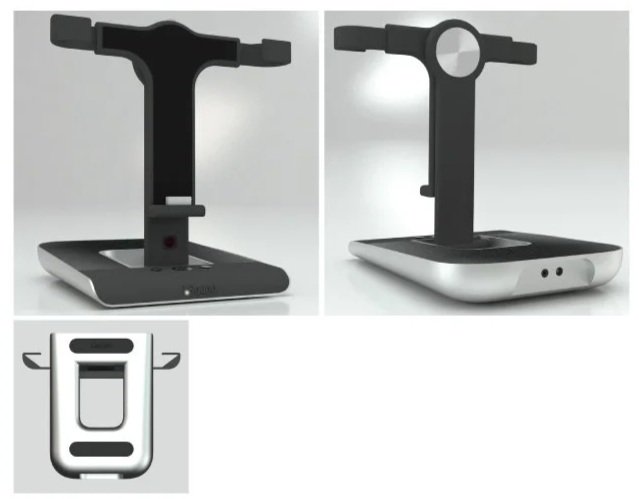
The redesign began with the original Cinema Sound concept: an accessory that combined tablet support with amplified audio for media use.
The original product validated the core consumer need, but the iPad platform was changing. New generations introduced shifts in device thickness, edge profile, dimensions, and user expectations.
Development review focused on:
What worked in the original Cinema Sound concept
Where compatibility needs to improve
How the tablet support system could become more adaptable
How device retention could feel secure without being restrictive
How the product could remain easy to understand at retail
How to preserve the entertainment value while improving usability
The redesign needed to maintain the core product promise while addressing platform compatibility issues caused by evolving iPad hardware.
-
Cinema Sound Pro needed to improve how people used an iPad for media.
Core use cases included:
Watching movies and video
Listening to music
Gaming
Desk or tabletop viewing
Shared casual entertainment
Hands-free tablet positioning
Improved sound compared with the tablet alone
These use cases shaped decisions around viewing angle, speaker placement, stability, device support, and user interaction.
-
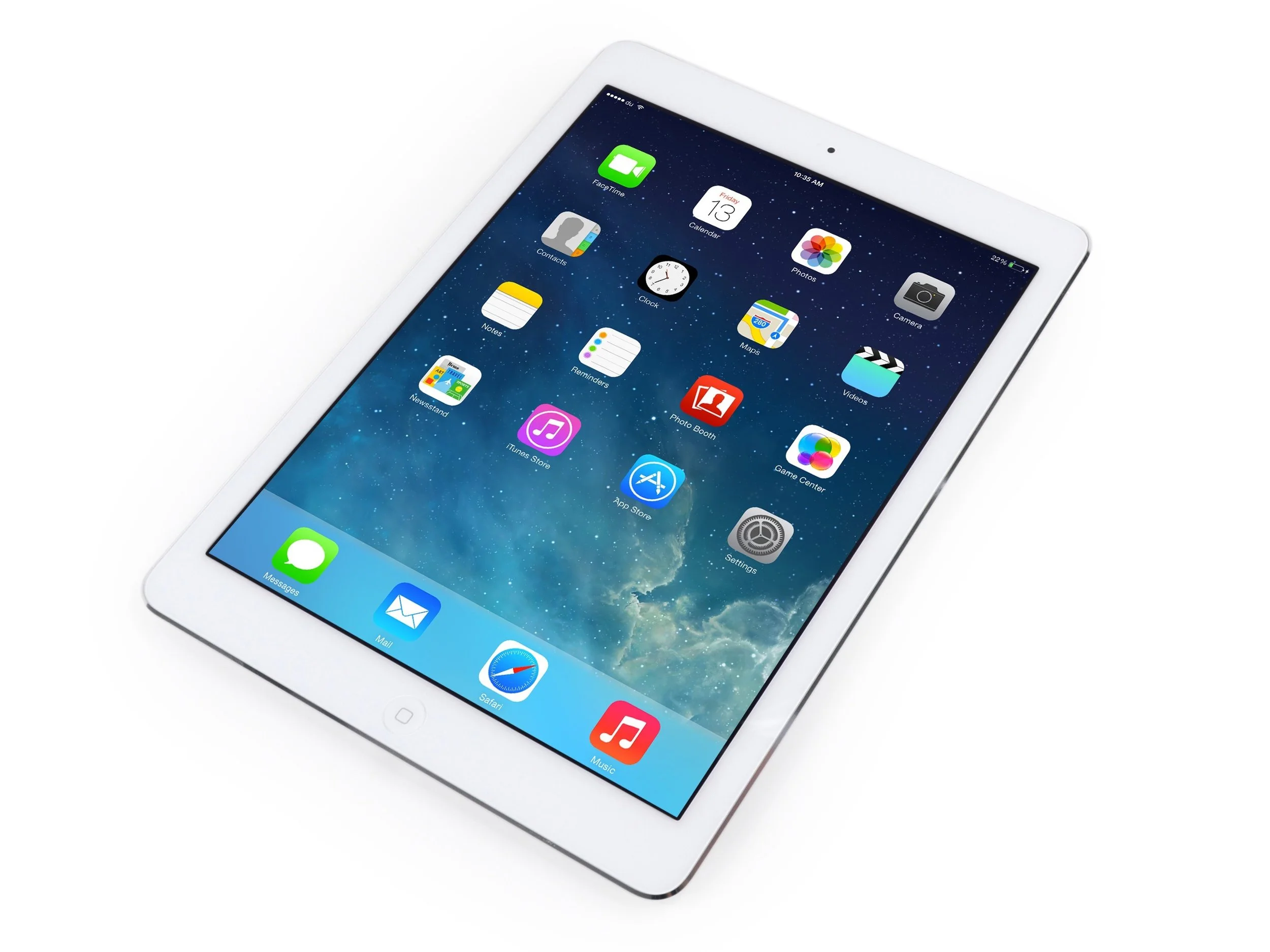
The early iPad category was changing quickly, so compatibility became a central product requirement.
Development review considered:
Tablet width and thickness
Edge radius and side profile
Button and port locations
Speaker and microphone areas
Screen visibility
Landscape viewing orientation
Device insertion path
Case-free tablet use
Potential variation between iPad generations
The product needed to work around the tablet rather than force the tablet into a rigid, single-generation dock architecture.
-
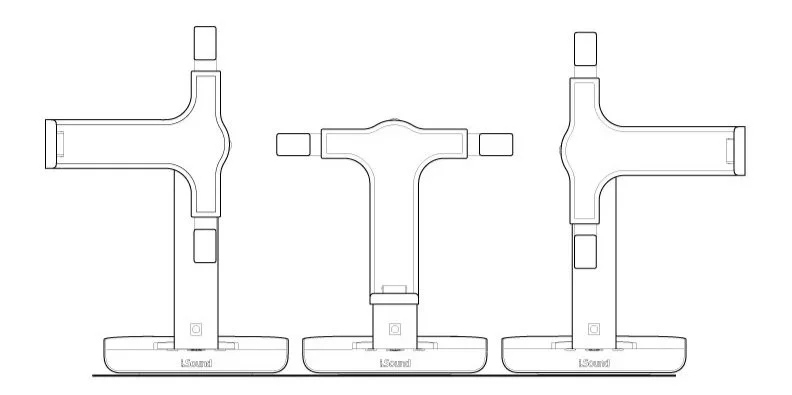
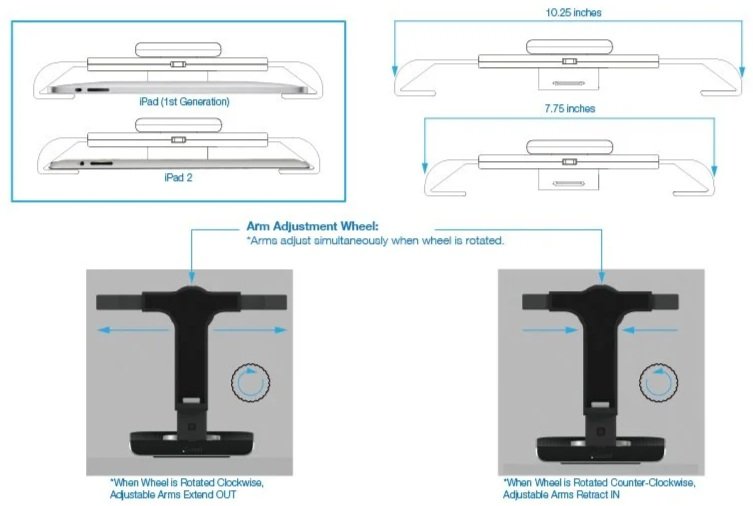
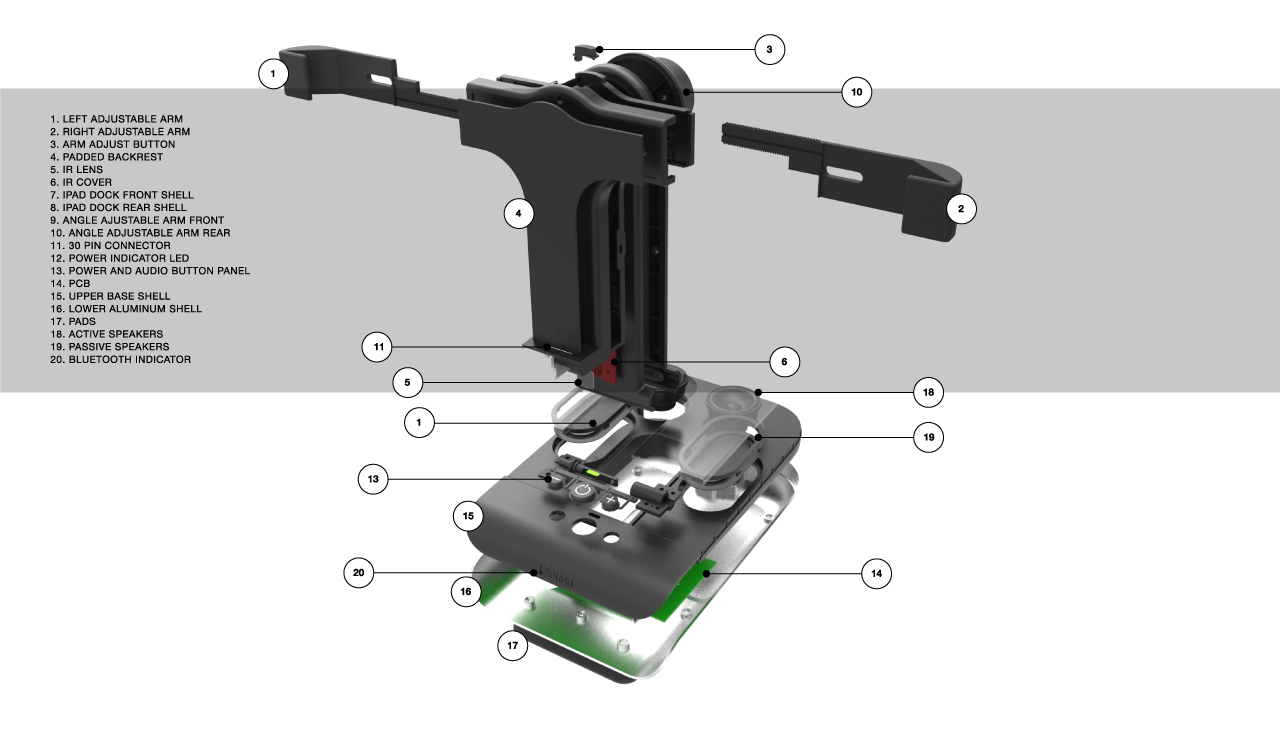
The clamping system became the core product-development problem.
It needed to hold the tablet securely while allowing enough adjustment to accommodate changing device dimensions and form factors.
Development considerations included:
Clamp opening range
Retention force
Contact points on the tablet
Device protection
Ease of insertion and removal
Stability during use
Alignment with the speaker body
Tolerance variation
User confidence
Long-term durability
The goal was to create a clamp that felt secure without feeling aggressive, fragile, or difficult to use.
-
A clamping accessory must create confidence without risking damage to the device.
Review areas included:
Grip pressure
Contact-surface geometry
Pad or soft-touch interface areas
Edge clearance
Tablet alignment
Removal effort
Stability during touch interaction
Perceived safety of the device
The product needed to communicate “secure support” immediately while avoiding any interaction that could scratch, pinch, or stress the iPad.
-
Cinema Sound Pro needed to work as both an audio product and a tablet stand.
Development focused on:
Landscape viewing angle
Center of gravity with the iPad installed
Front-to-back stability
Product footprint
Touchscreen interaction while docked
Speaker orientation
Cable access
Visual balance between the tablet and base
The accessory needed to feel stable when placed on a desk, table, or entertainment surface.
-
The product had to support the iPad physically while also delivering a clear audio benefit.
Product development considered:
Speaker placement
Sound direction
Control accessibility
Power and cable requirements
Internal component packaging
Housing construction
User-facing controls
Overall product proportions
Retail price expectations
The product architecture needed to integrate audio hardware, support structure, and clamping interaction into a single, understandable consumer accessory.
-
The product was developed through an OEM process that required repeated reviews of physical samples, usability details, and production feasibility.
Supplier coordination focused on:
Clamp geometry and range
Material and finish quality
Housing construction
Audio component integration
Assembly sequence
Tolerances and fit consistency
Control placement
Packaging fit
Production-readiness feedback
Sample reviews helped refine how the clamp, speaker body, and tablet-support structure worked together as a complete product.
-
The product needed to communicate its value quickly at retail and online.
Packaging and e-commerce communication focused on:
iPad compatibility
Improved audio experience
Tablet support and viewing use
Clamping functionality
Entertainment use cases
Product setup
Included components
Feature callouts
Product imagery showing the iPad installed
The goal was to make the product easy to understand as both a speaker and a tablet-support accessory.
Key Product Decisions
Original Product Architecture vs. Platform Evolution
Cinema Sound Pro needed to preserve the value of the original Cinema Sound concept while redesigning the tablet support system to accommodate changing iPad dimensions, edge profiles, and usage expectations.
Compatibility vs. Product Specificity
The product needed to support evolving iPad form factors without becoming so universal that it lost stability, fit, or perceived quality.
Secure Clamp vs. Easy Removal
The clamping system needed to hold the tablet confidently while still allowing users to insert and remove the iPad without frustration.
Device Protection vs. Retention Force
The clamp needed enough force to stabilize the tablet while protecting the device edges and finish.
Audio Product vs. Tablet Stand
Cinema Sound Pro needed to function as an audio accessory and a support product, so the design had to balance sound direction, viewing angle, stability, and user interaction.
Retail Clarity vs. Technical Detail
The packaging needed to explain compatibility and use quickly without overloading the customer with mechanical detail.
Product Experience
Adaptive Tablet Clamping
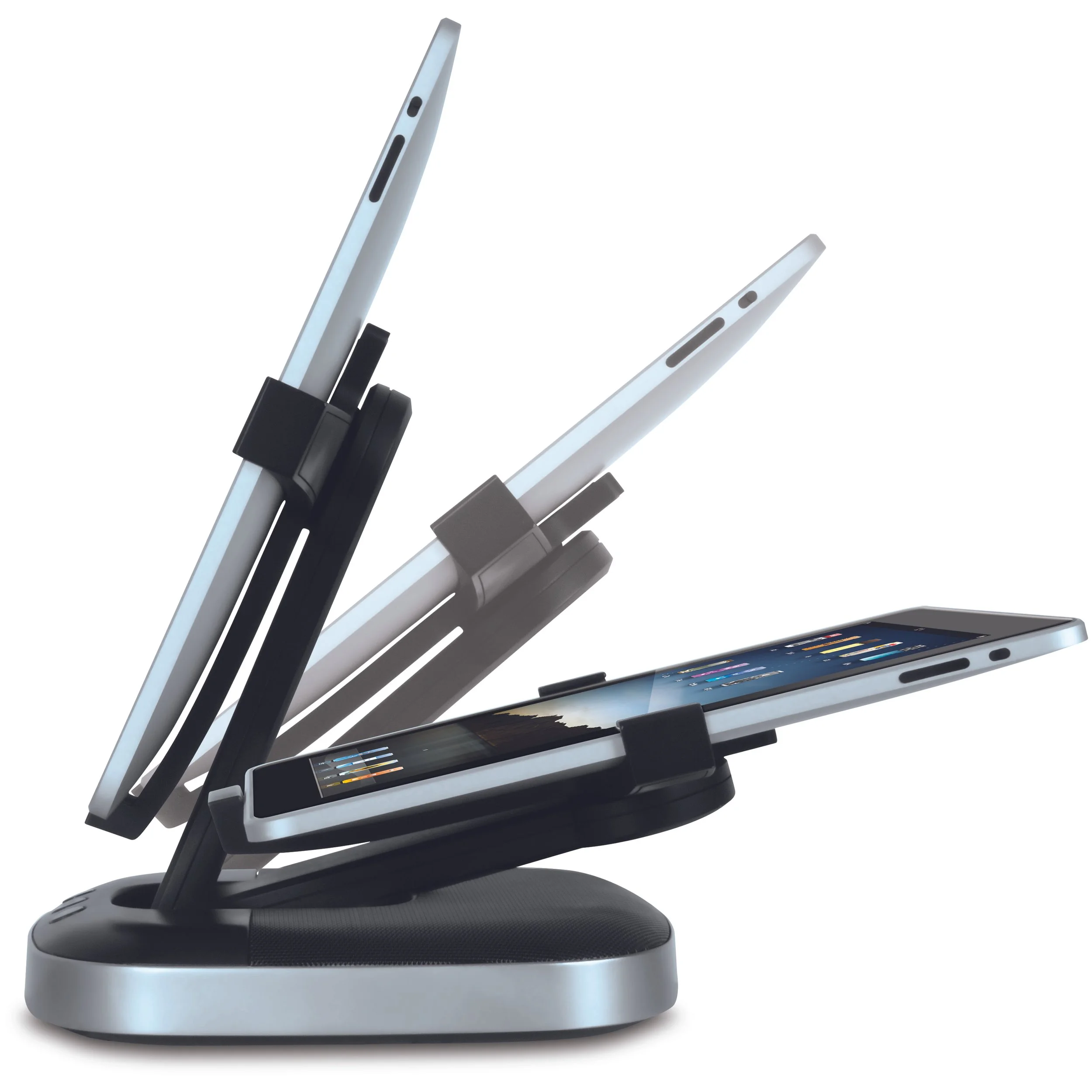
The redesigned clamping system allowed the accessory to support evolving iPad sizes and form factors while maintaining secure device retention.
Improved Entertainment Use
The product supported video, music, gaming, and casual media use with amplified sound and hands-free viewing.
Stable Tabletop Viewing
The product architecture created a stable base for landscape viewing and everyday tablet interaction.
User-Friendly Insertion and Removal
The clamp interaction was developed around practical daily use, allowing the iPad to be placed and removed without unnecessary complexity.
Retail-Ready Accessory Format
Product imagery, packaging, and feature communication positioned the product as an understandable consumer electronics accessory.